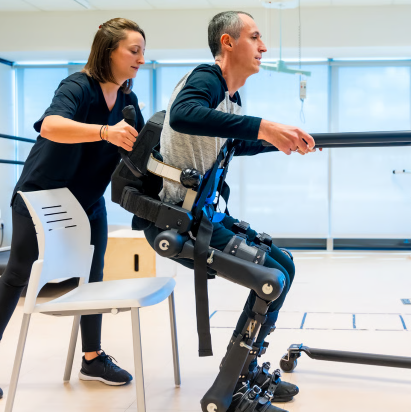
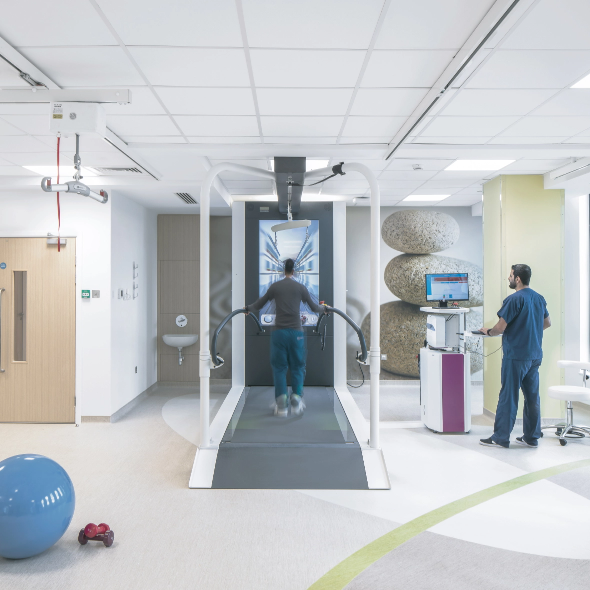
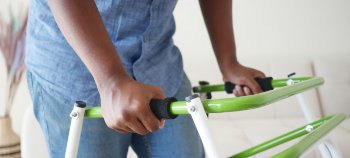


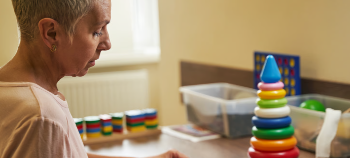
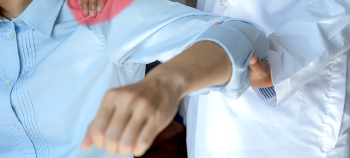
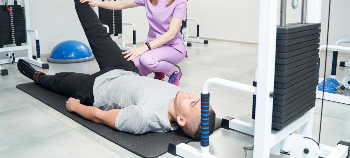
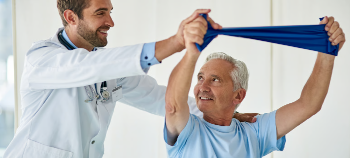
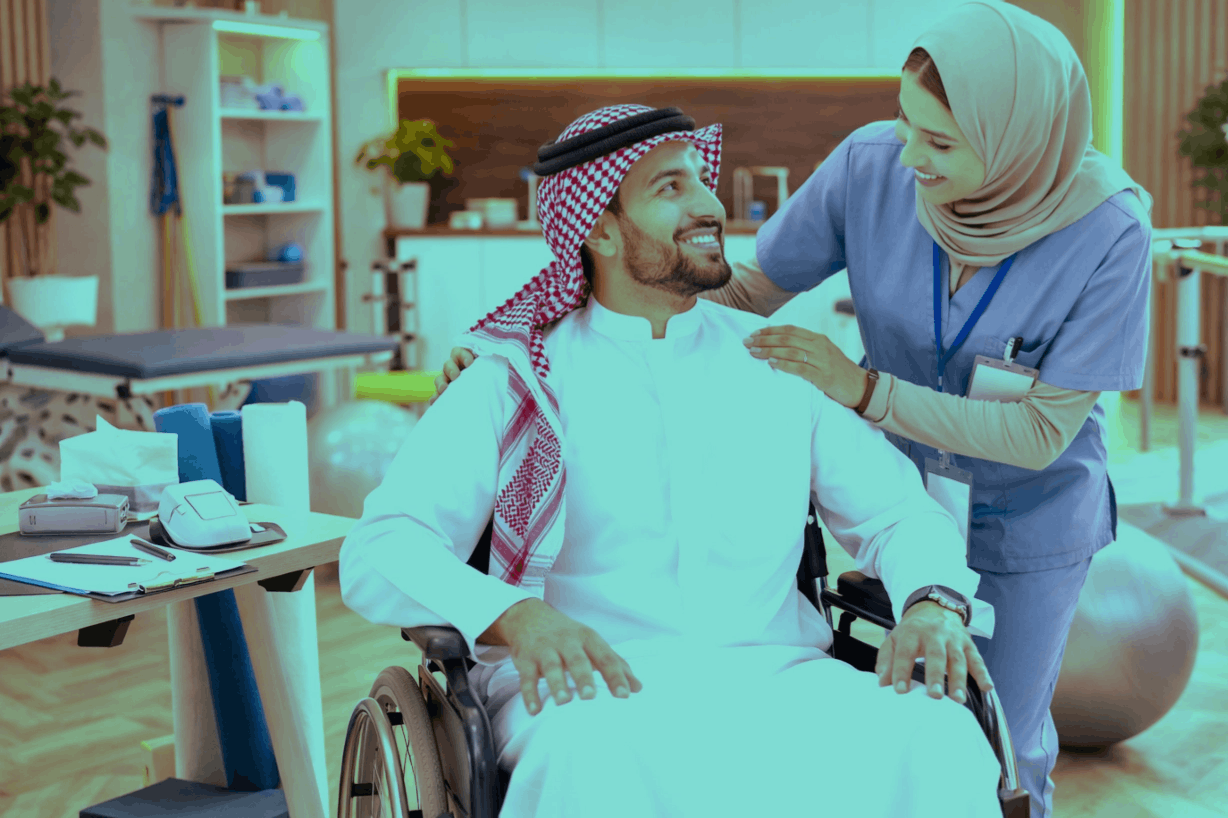
بعد خضوعه لجراحة معقدة لعلاج تَضَخُّم الرباط الطولي الخلفي (OPLL)، يواصل كارلوس استعادة حياته بثبات، مدعومًا بقوته الشخصية، ودعم عائلته، ورعاية فريقنا المتفاني.
A stroke can result in sudden changes to movement, communication, and cognition, often affecting how a person functions in daily life. At SRH, we support neurological recovery through a specialised rehabilitation approach that addresses these changes with precision and care.
We bring together clinical expertise and targeted rehabilitation therapies to support recovery across movement, speech, and cognitive function.
Each programme is designed to help patients relearn essential skills, adapt to new challenges, and regain confidence in everyday activities.
Throughout the recovery journey, we closely monitor progress and adjust therapy to reflect each patient’s response and potential. Alongside physical and cognitive rehabilitation, we support emotional adjustment and guide families through the process, ensuring that recovery is not only clinically managed, but also meaningful and sustainable beyond discharge.
What Stroke Rehabilitation Means
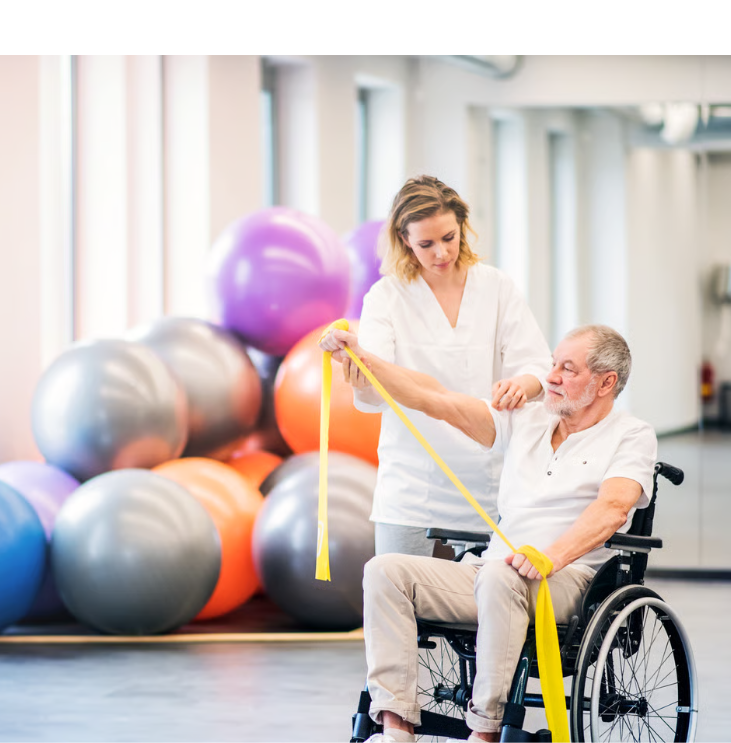
At SRH, we focus on helping patients regain abilities affected by stroke, while also supporting adaptation where recovery may take time. Rehabilitation is centred on relearning skills, rebuilding confidence, and improving the ability to perform everyday activities safely and independently.
Progress varies for each individual and is guided by the nature of the stroke and overall health. Our approach supports gradual, meaningful improvement, ensuring that recovery continues beyond the rehabilitation and into daily life.
Who Requires Stroke Rehabilitation
We recommend stroke rehabilitation for patients experiencing changes in physical, cognitive, or functional ability following a stroke. This may include individuals who:
Have weakness or paralysis affecting movement
Experience difficulties with speech, language, or swallowing
Have changes in memory, attention, or cognition
Require support with daily activities such as dressing, mobility, or self-care
Rehabilitation typically begins as soon as the patient is medically stable and continues through a structured programme tailored to recovery needs.
Inquire NowThe SRH Model of Care
At SRH Abu Dhabi, we deliver stroke rehabilitation through a specialised neurological rehabilitation approach, designed to support neurological recovery with clarity and purpose. We centre care around each patient, integrating therapy, medical oversight, within a dedicated neurological rehabilitation setting.
A Structured Pathway to Recovery
Assessment & Direction
We begin with a detailed neurological and functional assessment to understand the impact of the stroke on movement, communication, and cognition.
Personalised Rehabilitation
We develop a multidisciplinary programme focused on preventing complications while supporting relearning of movement, communication, and cognitive function.
Structured Progress
We guide patients through a progressive programme designed to rebuild skills affected by stroke, with therapy adapted to support gradual neurological recovery.
Transition & Continuity
We plan beyond the inpatient stay from an early stage, supporting stroke-specialized rehabilitation at home for eligible patients, continued therapy and long-term improvement in function, communication, and independence.
A Model Built Around Outcomes
At SRH Abu Dhabi, we focus on outcomes that support a safe and confident transition into daily life. Our approach ensures that recovery is not only clinically guided, but also practical, sustainable, and aligned with each patient's level of independence.
Conditions Within Stroke Rehabilitation
At SRH, we support patients across a range of stroke-related challenges, addressing both the immediate effects of stroke and the broader impact on daily function and quality of life.
Outcomes That Matter
Recovery, measured in independence.
At SRH Abu Dhabi, we measure recovery by how function improves over the course of rehabilitation. Progress is monitored throughout the programme to ensure each patient moves forward in a way that is steady and aligned with individual goals.
Improved mobility and control of movement
Patients regain strength, balance, and coordination, supporting safer and more confident movement.
Greater independence in daily activities
Patients manage personal care and routine tasks with reduced assistance.
Enhanced communication and cognitive function
Improvements in speech, understanding, and memory support more independent interaction.
Structured and measurable recovery over time
Progress is assessed at regular intervals,allowing therapy to be adapted to support continued improvement.
A clear path towards discharge and ongoing recovery
Rehabilitation is aligned towards a safe return home, with continuity of care beyond SRH.
Sustained improvement beyond the rehabilitation phase
Patients who achieve consistent progress are more likely to maintain independence and quality of life over time.
رحلات التعافي
شهادات المرضى
FAQs
Rehabilitation typically begins as soon as the patient is medically stable, often within days of the stroke.